Disconnected Marketing Is Quietly Costing Small Businesses Money
Most small businesses don’t realize how fragmented their marketing really is.
Leads come in through:
- Website forms
- Google Business Profile
- Facebook and Instagram messages
- Email inquiries
- Phone calls
And then… everything breaks apart.
- Someone forgets to follow up.
- A message gets buried.
- A lead doesn’t get tracked.
- A customer never hears back.
In 2026, this isn’t a motivation problem. It’s a systems problem.
That’s why integrated automation and first-party data have become one of the most important trends in local business marketing.
What “Integrated Automation” Actually Means (Without the Buzzwords)
Integrated automation simply means:
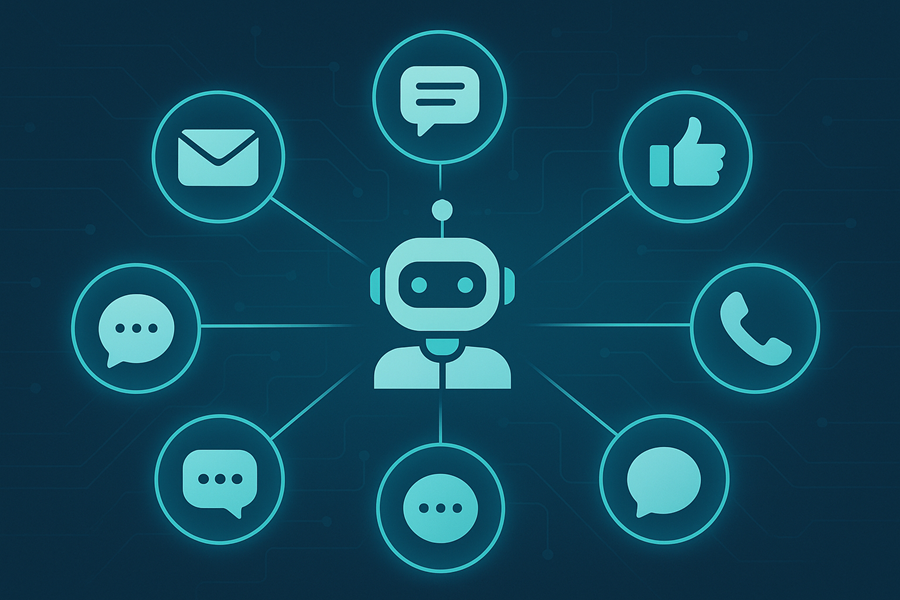
Every place a customer interacts with your business is connected — and triggers the right next step automatically.
Instead of separate tools doing separate things, everything works together.
An integrated system:
- Captures leads from all channels
- Stores them in one CRM
- Responds automatically
- Follows up consistently
- Tracks the full customer journey
This eliminates guesswork and human error.
Why First-Party Data Matters More Than Ever
First-party data is information you collect directly from your customers, such as:
- Names and contact info
- Service history
- Appointment behavior
- Email and text engagement
- Reviews and feedback
In 2026, first-party data is critical because:
- Privacy rules are tighter
- Third-party cookies are disappearing
- Platforms control less data for you
Your email list, CRM, and customer history are now assets, not just records.
Businesses that own and use their data strategically gain long-term stability.
Automation Turns Data Into Action
Data alone doesn’t grow businesses.
Action does.
Automation is what turns first-party data into:
- Timely follow-ups
- Personalized communication
- Smart reminders
- Relevant offers
For example:
- A form submission triggers an instant email and text
- A missed call triggers a follow-up sequence
- An appointment triggers reminders and confirmations
- A completed service triggers a review request
All of this happens without manual effort.
Why Disconnected Tools Fail Small Businesses
Many small businesses use:
- One tool for email
- Another for forms
- Another for scheduling
- Another for texting
- Another for reviews
The result?
- Inconsistent follow-up
- Missed opportunities
- No clear reporting
- More work, not less
In 2026, thought leaders agree: Tool sprawl is the enemy of growth.
Integrated systems outperform best-of-breed tools when resources are limited — which is almost always the case for SMBs.
How Integrated Systems Improve the Customer Experience
Customers don’t care what tools you use.
They care that:
- You respond quickly
- You remember them
- You follow through
- Communication feels consistent
Integrated automation creates:
- Faster response times
- Fewer dropped conversations
- Clear expectations
- A professional experience
To customers, it feels like your business is simply “on top of things.”
Where CRM Fits Into the Automation Conversation
A CRM is the foundation of integrated automation.
It acts as:
- The single source of truth
- The record of every interaction
- The trigger point for automation
Modern CRMs don’t just store data — they drive workflows.
This is why platforms like GoHighLevel have become popular with service-based and local businesses: they combine CRM, automation, email, SMS, and pipelines into one ecosystem.
Why Small Businesses Need Systems, Not Just Software
Software alone doesn’t solve problems.
Systems do.
That’s the thinking behind Dubach.io — a white-labeled implementation of GoHighLevel designed to give small businesses a working automation system, not just access to a platform.
Instead of starting from scratch, businesses get:
- Pre-built automation
- Logical customer journeys
- Centralized data
- Connected channels
The focus is on outcomes, not features.
Real-World Benefits of Integrated Automation
When automation and first-party data work together, businesses typically see:
- Higher lead response rates
- Better conversion rates
- Fewer missed opportunities
- Less manual work
- Clearer reporting
Perhaps most importantly, owners regain mental space.
When systems run in the background, growth feels more predictable.
Where to Start (Without Overwhelming Yourself)
You don’t need to automate everything at once.
Start with:
- Capturing every lead in one place
- Responding instantly
- Following up consistently
- Tracking outcomes
Once those basics are solid, everything else becomes easier.
Automation should simplify — not complicate.
Why This Trend Will Define 2026 and Beyond
The gap between businesses with integrated systems and those without is growing.
In 2026:
- Speed matters
- Consistency matters
- Experience matters
Integrated automation and first-party data give small businesses the ability to compete without hiring more staff or working longer hours.
That’s why this trend isn’t optional — it’s foundational.
Final Thoughts
Marketing in 2026 isn’t about chasing new platforms.
It’s about connecting the ones you already use.
When your website, CRM, email, text messages, and follow-up workflows work together, marketing stops feeling chaotic — and starts feeling reliable.
Integrated automation doesn’t replace people. It supports them.
And for small businesses, that support is the difference between stalled growth and sustainable momentum.


